Sci-Fi Alien Helmet Type 1
In the world of science fiction, helmets are an essential part of any space explorer's outfit. And in the year 2317, the newly designed Sci-Fi Alien Helmet Type 1 was the most advanced and sought-after piece of gear for any space adventurer.
The helmet was the brainchild of Dr. Veronica Lee, a renowned aerospace engineer who had dedicated her life to exploring the mysteries of the universe. Her inspiration came from the belief that the only way to survive in space was to think outside of the box and create a helmet that could adapt to any environment.
The Sci-Fi Alien Helmet Type 1 was designed to be modular, with interchangeable parts that could be customized to suit each wearer's needs. The helmet's visor was made of a special composite material that could adjust to any light conditions, from the bright glare of a star to the pitch-black darkness of deep space.
But the most impressive feature of the Sci-Fi Alien Helmet Type 1 was its ability to detect and translate alien languages. This feature was made possible by the helmet's neural interface, which allowed wearers to communicate with extraterrestrial life forms without the need for a separate translation device.
The helmet was first tested in 2315 on a mission to explore a new planet discovered in a distant galaxy. The team of astronauts who wore the helmet on this mission reported that it exceeded their expectations, allowing them to communicate with the planet's inhabitants and navigate the treacherous terrain with ease.
In the years that followed, the helmet became a popular choice for space explorers all over the galaxy. And while it may have seemed like a novelty item to some, the Sci-Fi Alien Helmet Type 1 saved countless lives by allowing humans to communicate with other species and navigate their surroundings safely.
Today, the helmet is on display at the Intergalactic Space Museum, where it serves as a testament to the ingenuity and resourcefulness of the human race. And as we continue to explore the vast expanse of space, the Sci-Fi Alien Helmet Type 1 will remain an important symbol of our ongoing quest to uncover the mysteries of the universe.
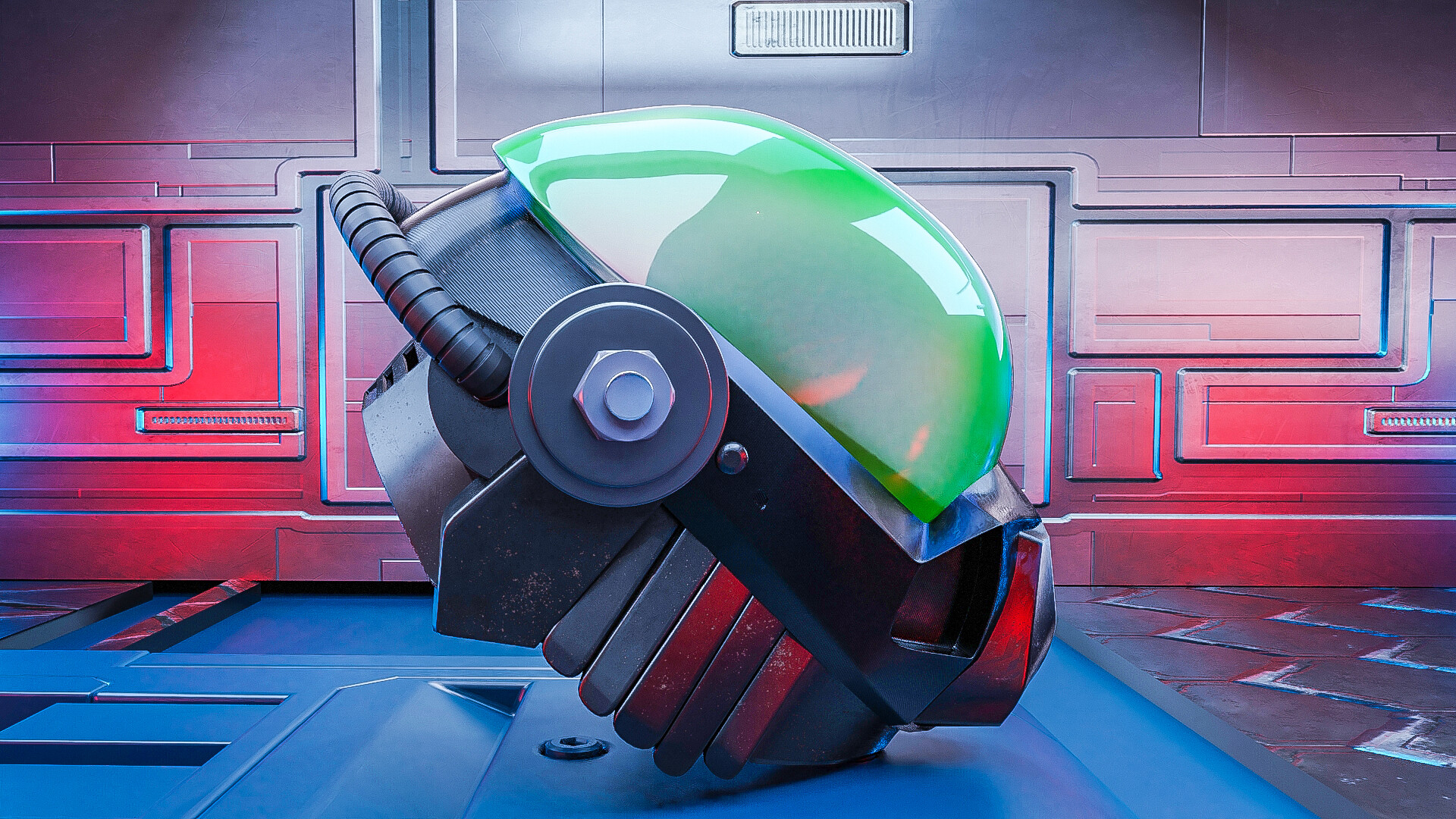
Sci-Fi Alien Helmet Type 1

Sci-Fi Alien Helmet Type 1

Sci-Fi Alien Helmet Type 1

Sci-Fi Alien Helmet Type 1