1984 ATS D7 Formula 1 Car
The year was 1984, and the Formula 1 scene was filled with excitement as the racing world awaited the debut of a brand new team. Enter the ATS D7, the first Formula 1 car to be designed and built entirely in Germany. The team was founded by a group of ex-employees from the famous March Engineering firm, and they set out to create a car that could compete with the best in the world.
The ATS D7 was a sleek and aerodynamic machine, with a distinctive red and white livery that would soon become iconic. The car was powered by a naturally aspirated 3.0-liter V8 engine that produced around 550 horsepower. It featured a carbon fiber monocoque chassis, which was a cutting-edge technology at the time, and advanced suspension and aerodynamics that allowed it to corner at high speeds.
The car made its debut at the Brazilian Grand Prix, and expectations were high. However, it soon became clear that the team had some teething problems to work out. The car was unreliable, and the drivers struggled to keep up with the competition. The season was a disappointment, with the team failing to score a single point.
Despite the setbacks, the ATS D7 was still a remarkable achievement. It was one of the first cars to be designed using computer-aided design (CAD) software, and it pushed the limits of what was possible in terms of aerodynamics and engineering. The team continued to work on the car, making improvements and refining the design.
In the end, the ATS D7 only competed for a single season before the team folded due to financial difficulties. However, its legacy lives on as a testament to the ingenuity and determination of the team that created it. Today, the car is a sought-after collector's item, and its distinctive red and white livery is instantly recognizable to motorsport fans around the world.
The ATS D7 may not have been a championship-winning car, but it was a groundbreaking achievement that helped to push the limits of what was possible in Formula 1. Its design and engineering paved the way for future generations of racing cars, and its place in motorsport history is secure.
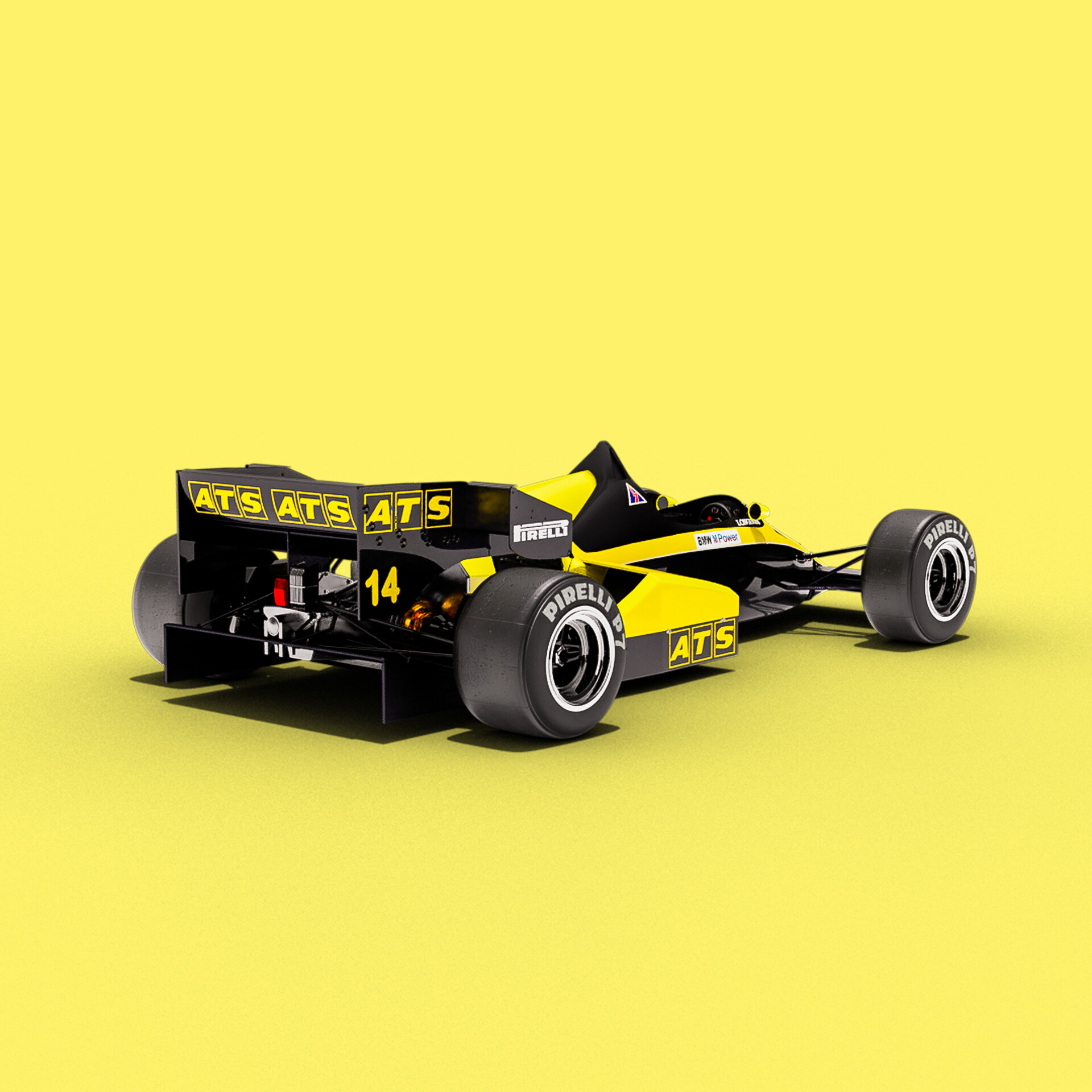
1984 ATS D7 Formula 1 Car

1984 ATS D7 Formula 1 Car

1984 ATS D7 Formula 1 Car

1984 ATS D7 Formula 1 Car

1984 ATS D7 Formula 1 Car

1984 ATS D7 Formula 1 Car